

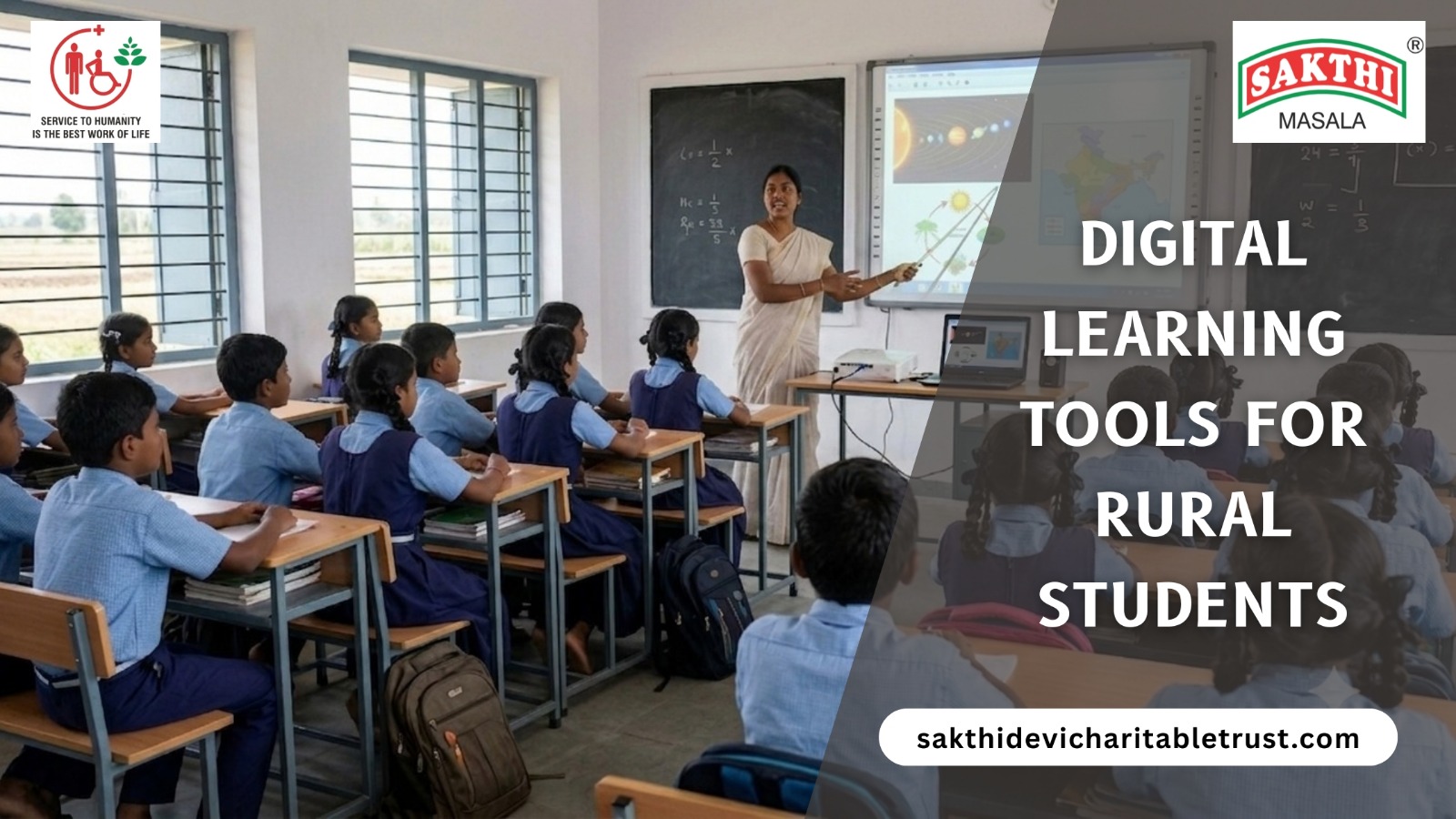
Digital Learning Tools for Rural Students: How They Boost Learning in Government Schools
For many government school teachers, digital learning tools for rural students feel like a big dream, but they can actually start small – with one phone, one projector or one simple learning app used well in class.
Why Digital Tools Matter in Rural Classrooms?
Rural children are smart, but they often lack exposure. When teachers use digital learning tools, topics like science, maths and English become more visual and easier to understand. Short videos, pictures and audio clips help first-generation learners connect lessons with real life. This keeps attention in class and reduces fear of tough subjects.
Also Read: Rural Education Development in Erode: Simple Steps That Actually Work
What Counts as a Digital Learning Tool?
For government schools, digital tools do not always mean expensive smart boards. They can be:
- A shared smartphone with lesson videos
- A basic projector and speaker
- Simple digital learning apps for rural students that work offline
- Government platforms like DIKSHA or e-content loaded on a pen drive
The value comes from how teachers use these tools, not the price of the device.
How Digital Tools Boost Learning in Government Schools?
Teachers can use digital learning tools for rural students to:
- Show short concept videos before or after chalkboard teaching
- Play audio stories to build listening and language skills
- Display diagrams and maps clearly to the whole class
- Give simple quizzes where students answer by raising hands or cards
This mix of board and screen helps different types of learners – visual, audio and slow learners – stay included.
Role of Online Learning for Rural Students
During holidays or after school, online learning for rural students can continue support. Even if there is only one device at home, siblings can:
- Watch revision videos
- Practise basic maths and English
- Explore career awareness content in simple language
Teachers can suggest safe, age-appropriate channels and apps so families know where to start.
Also Read: Role of Teachers in Rural Education: Practical Strategies to Improve Government Schools
Common Mistakes Schools Should Avoid
To make digital tools truly helpful, schools should avoid:
- Using long videos that replace teaching instead of supporting it.
- Playing content in English that students do not understand.
- Depending only on devices and forgetting board work and interaction.
Short, clear content in local language or simple English works best.
How Sakthidevi Charitable Trust Can Support?
In Erode and nearby areas, Sakthidevi Charitable Trust already works closely with government schools through libraries, mentoring and skills programs. As schools slowly adopt more digital learning tools for rural students, the Trust can help by guiding low-cost setups, sharing curated content lists and connecting digital lessons with its existing education activities.
If you are a teacher or school leader in and around Erode, exploring Sakthidevi Charitable Trust’s education services can be a practical next step to blend books, real-life activities and digital tools in a simple, child-friendly way.

 ADDRESS
  Phone Number
 EMAIL ID
Leave a Reply